3. Block out the outside
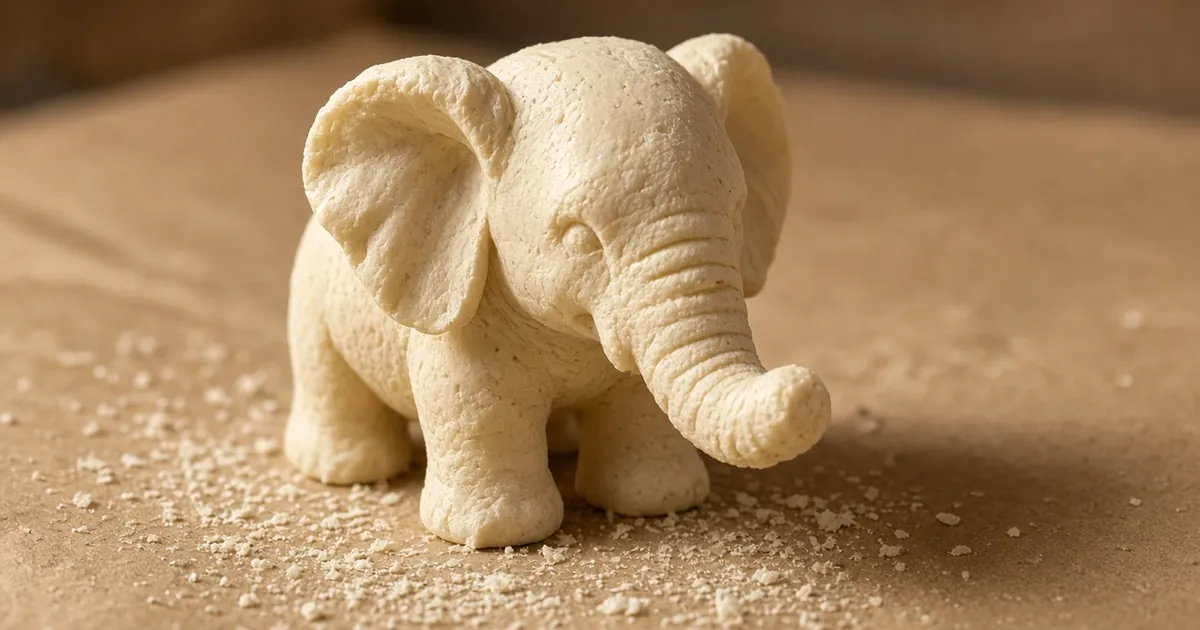
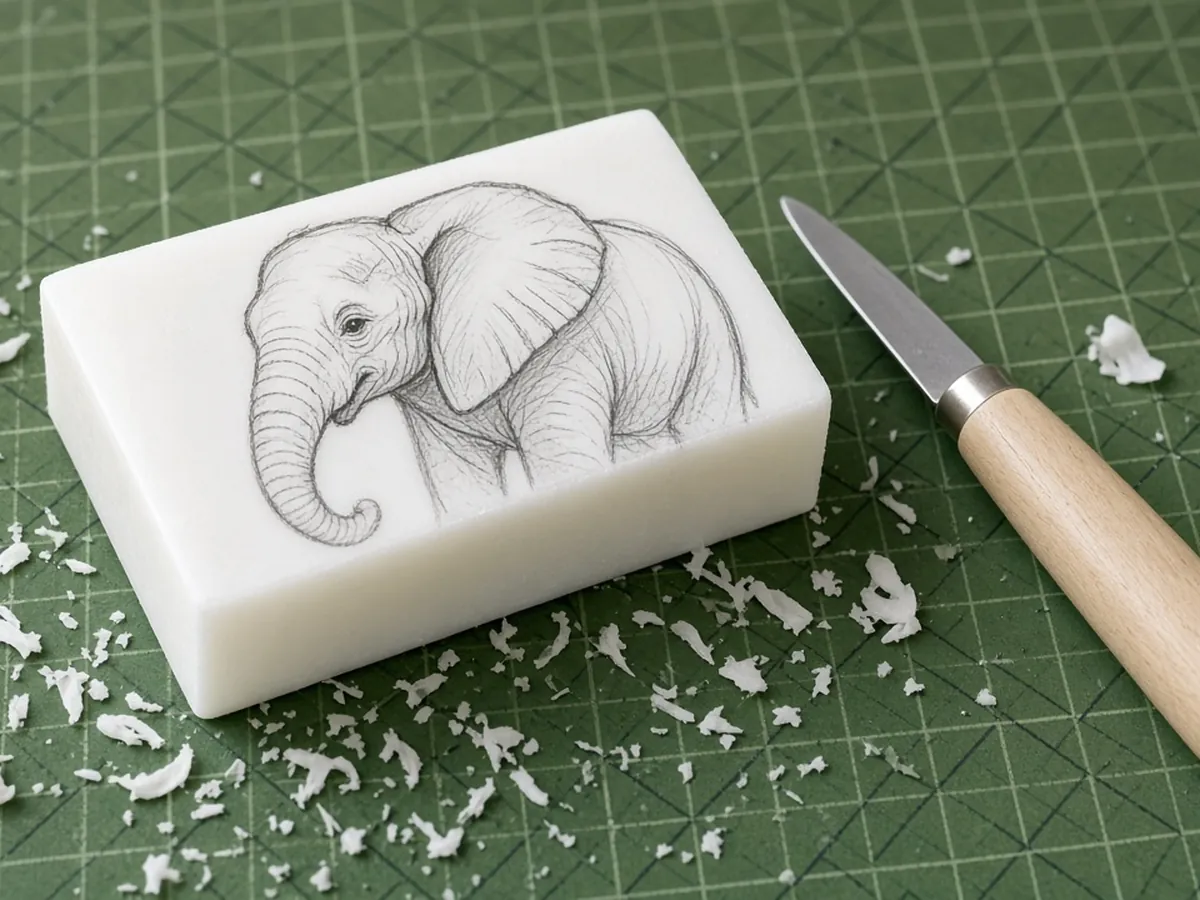
Shave off the four corners and the large spaces around the legs and trunk. Turn the bar often and stop just outside the pencil line. The body should read from the side before you add the ear. Protect the bridges between head, trunk, ear and chest.
4. Shape the head and one strong ear
Round the forehead and lower the area around the ear with shallow bevels. Leave the ear attached along a broad upper root. A single inner curve is enough to show its fold. The ear should be a plane, not a separate flap.
5. Round the trunk and legs
Round the underside of the trunk and the outside of each leg. Keep the gaps between the legs shallow and open. If a leg starts to weaken, merge it into the belly. Four sturdy feet beat four thin outlines.
6. Level the base and stop
Place the elephant on the towel and flatten only the underside that rocks. Round sharp corners, press in one eye, brush away crumbs and check the front, side and end views. Air-dry before display.
Finished means: a stable stance, a connected trunk, a readable ear and no fragile point.
Three relationships make the elephant
The body is the anchor, the ear is the broad side plane and the trunk is the line that shows direction. Keep those three clear and you don’t need tusks, wrinkles or toenails for the animal to read. From the end, the elephant should still have real mass.
Easier elephant soap carving versions
- Front-facing head: skip the legs and carve one broad ear on each side of a rounded face. This is the easiest version.
- Baby elephant: a larger head and a shorter trunk, which is naturally sturdier.
- Low relief: keep the outline on the face of the bar and leave out all the gaps between the legs.
- Trunk-up elephant: curl the trunk up and back so it rests against the forehead. It’s joined along its length, so it’s hard to break.
Rescue plan
| Problem | Fix |
|---|---|
| The trunk cracked | Shorten it and widen its root. A small rounded trunk still shows direction |
| The ear broke | Turn it into one shallow ear plane or merge it into the head. Don’t cut a second fragile flap |
| A leg is too thin | Merge it into the belly and make a stable low base |
| The soap is soft | Stop cutting deep gaps. Use broad relief and leave out tusks, wrinkles and small details |
More fixes: soap carving problems and fixes.
Bench safety
Work on a stable towel, keep your supporting hand behind the tool path, and cut away from your body with light pressure. A rounded butter knife is enough. Never force a stubborn cut. Keep soap out of mouths and eyes, and wash your hands afterward. Children need active, close adult supervision. See soap carving safety.
FAQ
What soap is best for an elephant soap carving?
A firm, plain, opaque bar with a broad face. Test a spare corner first and choose a bar that makes a clean curl without force, dust or a glossy smear.
How do I keep an elephant’s trunk from breaking?
Draw a short, thick trunk with a wide connection to the head. Remove the surrounding waste first and round the tip, or curl the trunk back against the head so it’s supported along its length.
Can I carve an elephant from a flat bar?
Yes. A strong side profile is enough for a beginner elephant. Use shallow bevels to suggest the ear, shoulder and belly without hollowing the body.
Is an elephant hard to carve from soap?
It’s a step up from a fish or turtle because of the trunk and legs, but it’s still a beginner project if you keep them thick and connected. The front-facing head version is the easiest way in.
Can children make a soap elephant?
Yes, in an adult-led activity with close, active supervision. The adult controls the tool path and keeps soap pieces away from mouths, eyes and pets.
When is the elephant finished?
When the body, trunk, ear, legs and base read clearly and every connection feels sturdy. A single eye and one ear plane are enough detail.
Keep making small forms
- How to carve a whale from soap: another broad, forgiving body
- Giraffe soap carving: the next “long feature” challenge
- Friendly dog soap carving
- Animal soap carving ideas for beginners
- What is soap carving?