Editorial check: 2026-09-27 · The four pictured stages match this connected relief project. No hands-on carving test is claimed. Sharp tools can cut; adults should actively supervise children.
24 Animal / beginner project
How to Carve a Wolf Silhouette from Soap
A wolf soap carving can read clearly without tiny fur marks or fragile, freestanding parts. This lesson shapes a standing side profile on one broad face: a long muzzle, upright ears, a sloped back and an attached tail. Keep the bar behind the figure as a quiet support, then finish with a few shallow details.
Begin the four quiet stages ↓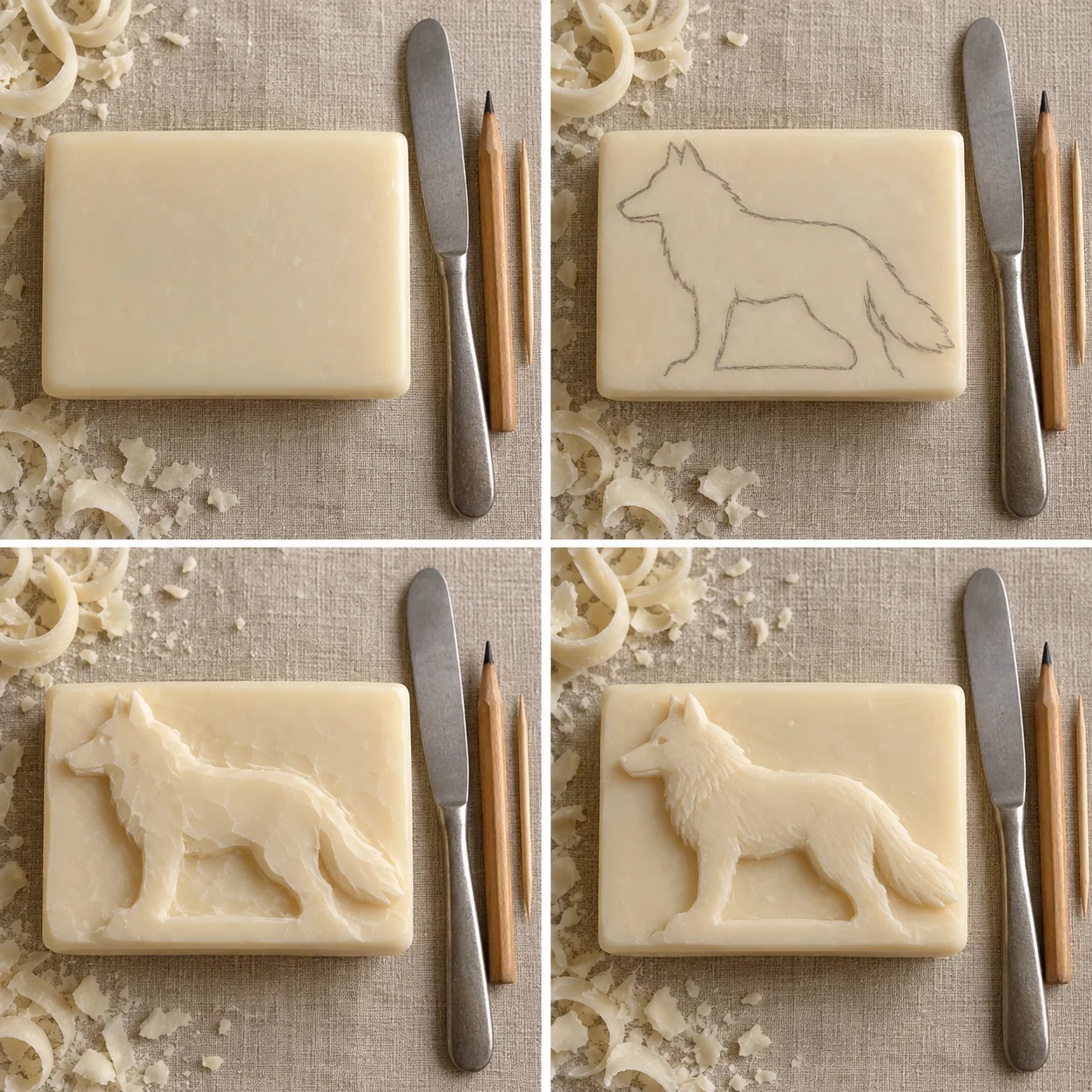
01 Set the bench
Give the wolf room to stand.
Choose a bar with enough length for a muzzle, shoulder, hindquarters and tail, plus a wide strip of untouched soap below the paws. This design is a face relief, not a miniature that comes free from the bar. The uncut back and lower band are what keep the outline joined together. If you want a different animal profile, compare the seated form in our friendly dog carving; the wolf relies on a longer muzzle and upright ears instead.
Read the soap carving safety guide before setting out tools. If a bar is soft, damp or crumbly, draw a simpler outline rather than trying to force a crisp edge.
- 01One firm, dry bar
A broad, smooth face gives the standing profile room and makes the pencil line easier to read.
- 02A folded towel
Set the bar on a stable surface so it does not skate while you draw or remove small curls.
- 03A soft pencil
Use a light outline for the muzzle, back, feet, tail and ear bases before making a cut.
- 04A rounded butter knife
It is enough for the broad, shallow passes in this beginner relief. Do not pry with the point.
- 05A toothpick
Keep it for one small eye and a few surface lines; deep fur grooves are not needed.
02 Four quiet moves
Let the profile appear.
Follow the four panels from upper left to upper right, then lower left to lower right. Remove less than the pencil outline suggests, turn the bar between passes and keep the supporting hand outside the tool path. The guide to shallow carving passes explains how to read the soap as you work.
- 01
Plain bar / map the pose
Draw a standing side profile.
Lay the long face horizontally. Sketch a wolf looking to one side, with a long muzzle, two upright ears, a sloping shoulder and a tail that curves back toward the rump. Join the paws with a broad baseline and leave an uncut border around the figure. Keep the head and tail comfortably thick; do not draw separate spikes of fur.
- 02
Outer face / reveal the outline
Lower the background in small curls.
With the bar resting flat on the towel, take a few light passes just outside the body. Start with the large outer corners, then lower a narrow band around the muzzle, back and tail. Turn the soap rather than twisting your wrist. Stop well before the far side of the bar: this is a relief, so the wolf stays attached to its soap backing.
- 03
Broad planes / keep it connected
Shape the head, shoulder and tail.
Soften the cheek and chest with shallow bevels. Let the muzzle taper, but leave a rounded tip and plenty of soap beneath the nose. Keep the ear roots wide, the tail joined to the hindquarters and both feet connected to the baseline. Check the side view after each pass; if a point begins to flex, leave more material and simplify it.
- 04
Finished profile / stop at the reading
Add a few quiet marks.
Use the toothpick for one small eye and, if the bar allows, a short cheek or shoulder line. A shallow notch can separate the legs while the lower band remains intact. Brush away crumbs and look from arm’s length. When the long muzzle, upright ears and tail make the animal read, stop; fur texture and deep grooves would only weaken the relief.
A small design choice / profile first
Make the silhouette do the work.
The quickest way to separate this project from a dog is to change the whole outline before adding detail. Give the wolf a longer, narrower muzzle, alert upright ears and a level, watchful stance. A dog project may use a sitting body or floppy ears; here the shoulder and back form one long line, with the tail carried behind the body.
Keep the profile graphic. Soap does not need individual fur strands to suggest a coat: a broad cheek plane and one short shoulder mark are easier to control and leave more strength in the bar. If your first sketch looks too delicate, shorten the tail, widen its root and make the feet merge into the same low band.
03 Rescue plan
Keep the wolf whole.
Small changes can rescue the idea without making another deep cut. If a section crumbles or the outline stops reading, pause and choose the simpler shape. The soap carving problems-and-fixes guide covers rough edges, cracks and chipped details.
- The muzzle looks blunt.
- Take one light bevel from the top and bottom, then reassess. Do not hollow the nose to create a sharper point.
- The tail looks separate.
- Stop lowering the background at its root. Widen the connection or turn it into a shorter curve that meets the rump.
- The ears are too thin.
- Round the tips and keep a broad bridge between the ears. A simpler head outline will survive better than two isolated points.
- The soap cracks or powders.
- Put the tool down, brush off loose crumbs and inspect the bar. Leave that area thicker, reduce the detail or choose a firmer bar for another attempt.
05 Five useful answers
Questions from the towel.
How do I make a wolf soap carving look different from a dog?
Use a longer, narrower muzzle, upright ears and a level, alert side profile. Keep those features broad and connected instead of adding thin fur spikes or separate parts.
How do I stop the wolf's tail or ears from breaking?
Keep the tail joined to the hindquarters and the ears broad at their bases. Make a shallow relief in the face of the bar, leave a solid lower band beneath the paws and stop if the soap begins to flex or crumble.
Can I carve a wolf from any bar of soap?
A firm, dry bar with a broad, smooth face is easiest to sketch on. Test one small curl at an edge; if the soap smears, crumbles or cracks, simplify the outline or choose another bar.
Do I need a sharp carving knife for this project?
No. A rounded butter knife can make the broad beginner cuts shown here. If an adult chooses a sharper tool, follow its instructions, keep the supporting hand out of its path, cut away from the body and store it safely.
Is this a freestanding 3D wolf?
No. This lesson makes a low-relief profile on one face of the soap bar. The bar stays behind the wolf as support, so the ears, tail and paws remain connected to the base.