Editorial check: 2026-08-31 · Written for general education by Soap Carving Lab. Tools can cut; adults should actively supervise children. This is not professional safety advice.
01 Project / Botanical
The Forgiving Leaf
Make a broad, graceful leaf in twenty quiet minutes—with one firm bar, one rounded edge, and four forgiving decisions.
Begin with the four steps ↓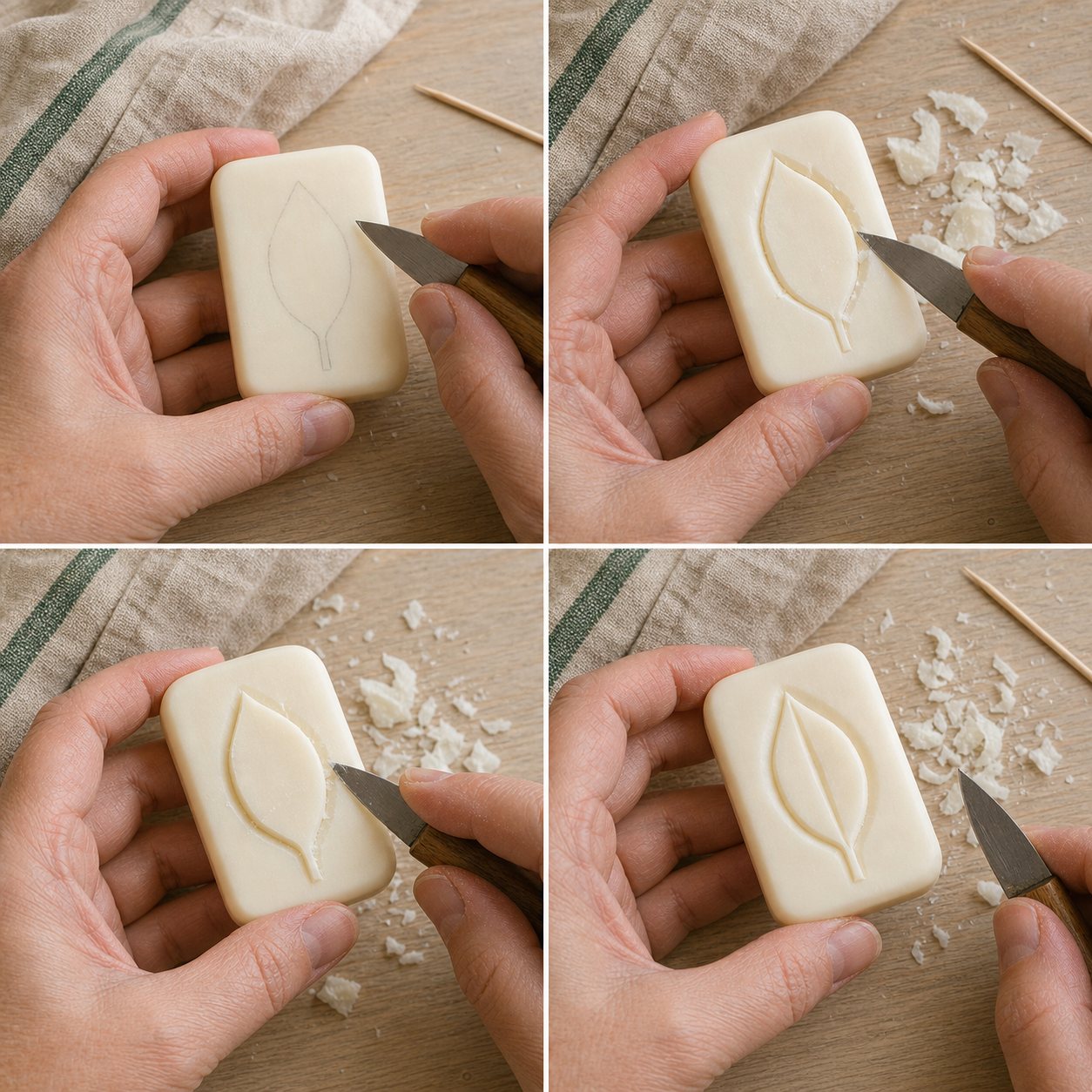
02 Set the bench
Four things are enough.
Put a tea towel under your hands before you unwrap the bar. It keeps the soap from skating, catches curls, and gives the finished leaf a clean place to rest. Work dry; water can make the surface harder to read or tacky.
-
01
One firm, unscented bar
Choose a plain bar that holds its corners and feels dry, not waxy or crumbly.
-
02
A rounded butter knife
The blunt edge makes shallow silhouette cuts without force.
-
03
A soft pencil
A redrawable map is kinder than a permanent pen line.
-
04
A toothpick or wood skewer
Use it for the final vein and optional side marks.
03 Four quiet moves
Let the leaf appear.
The order matters. First make the material cooperative, then make the drawing clear, then remove only what sits outside it. The last mark is detail—not rescue.
-
01
Start with a stable bar.
Pat the soap dry and settle it on the towel. Hold the butter knife like a pencil, with your thumb on the handle. Test a shallow pass along a spare edge. A good bar gives a little resistance and leaves a clean curl; it should not skid, smear, or turn to dust.
Look for: a surface that keeps its shape after a light touch.
Bar Begin with material that can say yes. -
02
Draw a map, not a masterpiece.
On the broadest face, draw an almond with a pointed tip and rounded base. Let it fill two thirds of the bar, leaving a safe margin around every edge. Add a light center line from base to tip. Widen it now if needed; pencil is kinder than a correction cut.
Leave: at least a finger-width of soap around the narrow tip.
Map Make the shape generous before making it pretty. -
03
Cut the silhouette in shallow passes.
Turn the bar as you work, keeping the knife moving away from your fingers. Follow the outside line in three or four shallow passes, staying just outside the pencil mark—especially at the tip. When the waste is gone, take one light clean-up pass so the leaf reads from a distance.
Remember: turn the soap, not your wrist, when the curve changes direction.
Silhouette A clear outline is already a finished idea. -
04
Score one center vein, then stop.
Use the toothpick or rounded back of the knife to press a shallow line from the base through the broad middle, tapering before the tip. Add two or three side veins only if the bar stays solid. Brush away crumbs and look at the shape from arm’s length.
Finished means: the leaf still feels sturdy enough to pick up by its base.
Center vein One confident line gives the form somewhere to breathe.
Bench reading Shape before detail
Make the middle do the work.
A leaf is a useful first botanical form because one outside curve carries most of its identity. The broad middle gives the eye a stable center, the taper suggests direction, and the base stays wide enough to hold. Your first goal is not a botanically exact species; it is a silhouette that still feels balanced when you set the soap down or view it from arm’s length.
Use the bar’s long axis for the leaf when the face is rectangular. A leaf about one and a half to two times as long as it is wide usually feels graceful without becoming fragile. Keep the shoulders full where the curve turns toward the tip, and leave a clear border around the drawing. If the bar is narrow, shorten the point before you narrow the middle. A sturdy outline will look more intentional than a long, delicate tip.
The center vein works because it explains the direction of the form without dividing it in half. Press it lightly and stop before the tip so the end can catch light. If the bar begins to feel warm or tacky, pause, brush away the dust, and let it cool on the towel. Dry, firm soap gives cleaner curls and makes it easier to judge whether the next cut is actually helping.
04 Rescue plan
A break usually points to a thin place, too much pressure, or an uncooperative bar. Adjust the shape before you call the session lost.
05 Quick answers
Before the first cut.
What soap works best for this project?
Choose a firm, unscented, opaque bar with clean corners. Avoid wet, soft, sandy, or crumbly soap. A plain 100–125 g bar leaves enough thickness for the tip.
Do I need a carving knife?
No. A rounded butter knife handles the silhouette and a toothpick handles the vein. Add specialist tools once you know the cut you repeat.
How deep should the center vein be?
Start with a shallow score, about the depth of the toothpick’s rounded tip. It should catch light while the leaf stays strong. You can deepen it later; you cannot replace soap.
What should I do if I make a mistake?
Pause and rotate the bar. Turn a crack into a notch, widen a side, or let an uneven edge become the new outline. Look before cutting again.
How can I make the leaf look more natural?
Keep the outline slightly unequal, taper the vein before it reaches the tip, and avoid filling the face with marks. Natural leaves are read through their broad rhythm first; a few restrained lines are enough to suggest the rest.
06 The project shelf
Keep your hands moving.
When the leaf is resting on its towel, choose another small form that teaches one new kind of line.
Back to all projects ↗