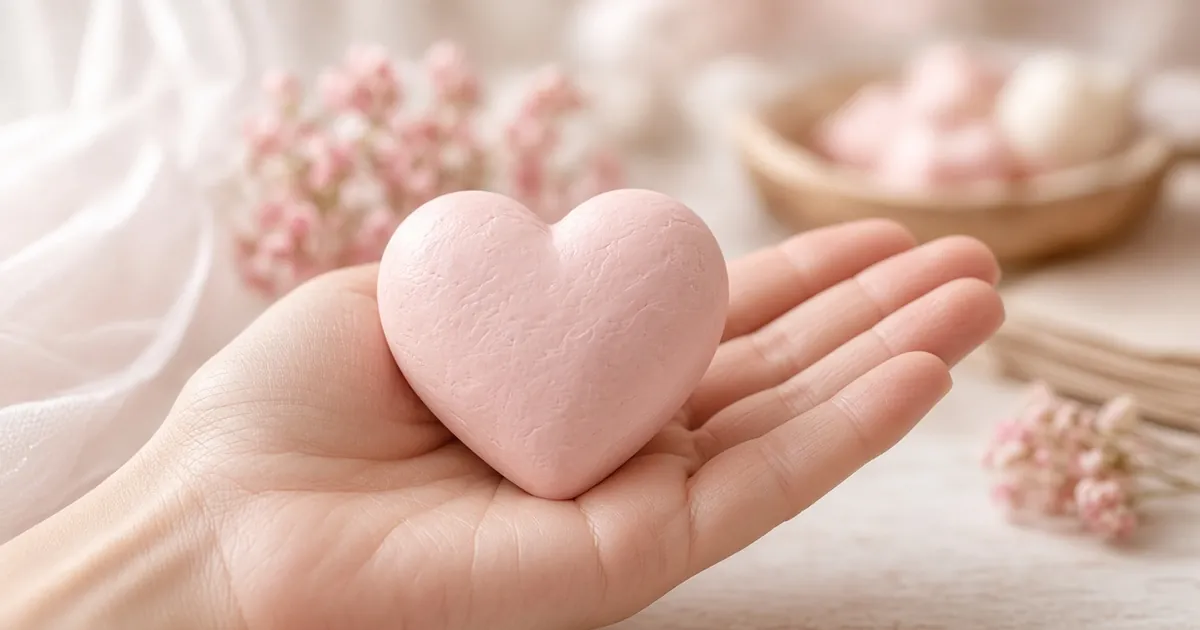
To carve a heart from soap, draw two wide curves meeting at a short point on the broad face of a firm bar, cut away the outside in shallow passes, stop before the bottom point gets thin, then soften the edges with one light pass. It takes about 15 minutes with a butter knife and is one of the most forgiving first projects, because the two lobes don’t need to match.
| Project | Level | Time | Soap | Tools |
|---|---|---|---|---|
| Soap carving heart | Beginner | ~15 min | One firm, dry bar | Butter knife, pencil, toothpick, towel |
What you need
- One firm bar: unscented and dry is easiest to read. See the best soap for soap carving.
- A butter knife: a rounded edge, never a sharp blade
- A soft pencil: for two broad curves and a center point
- A toothpick and a tea towel: one for a light line, one for grip and cleanup
How to carve a heart out of soap: 4 calm moves
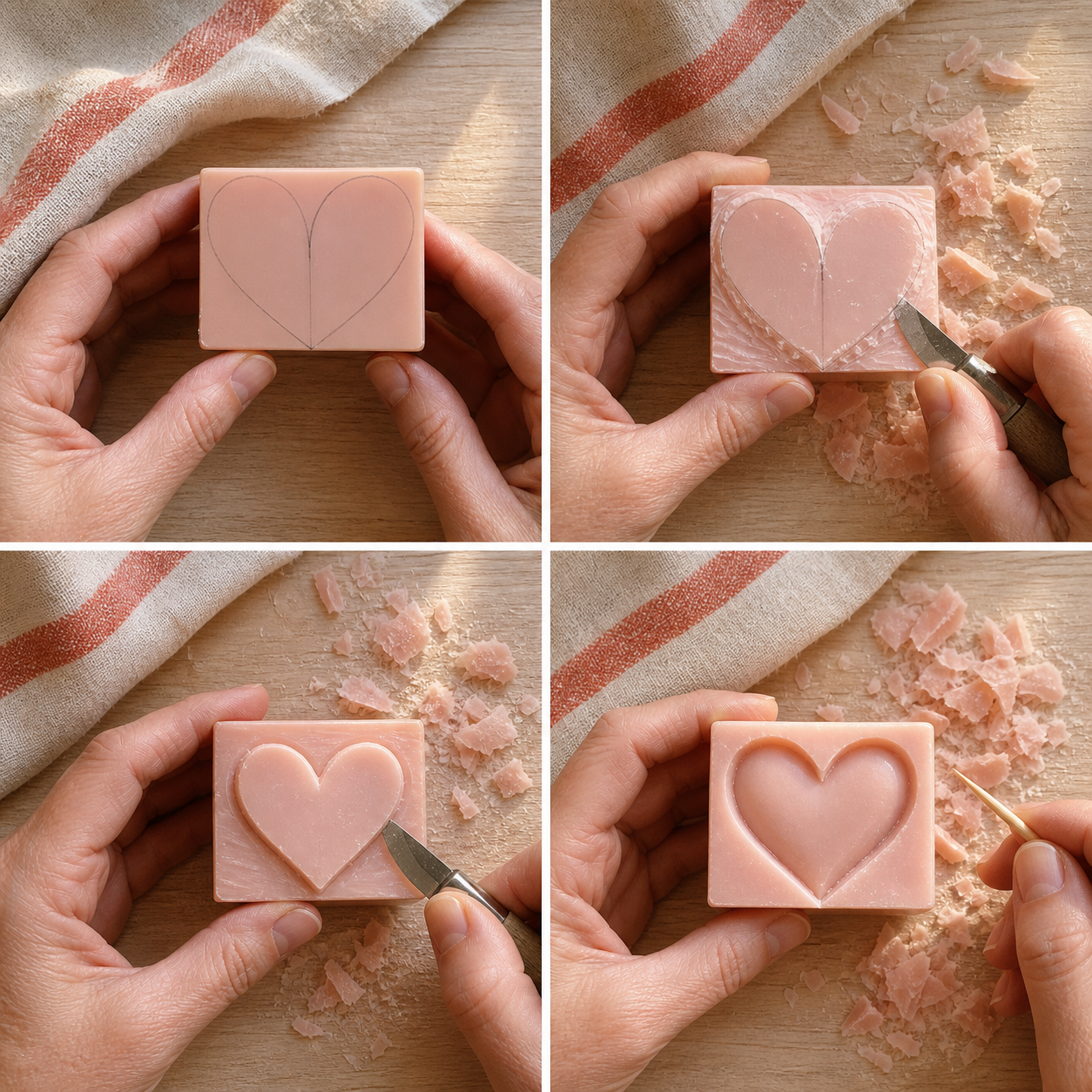
1. Draw the curves
Place the heart on the broad face, leaving breathing room around it. Start at the dip between the lobes and draw one wide curve down to the bottom point, then repeat on the other side. Keep the lobes round and the point short. A heart that fills about two-thirds of the face is easier to hold while you cut.
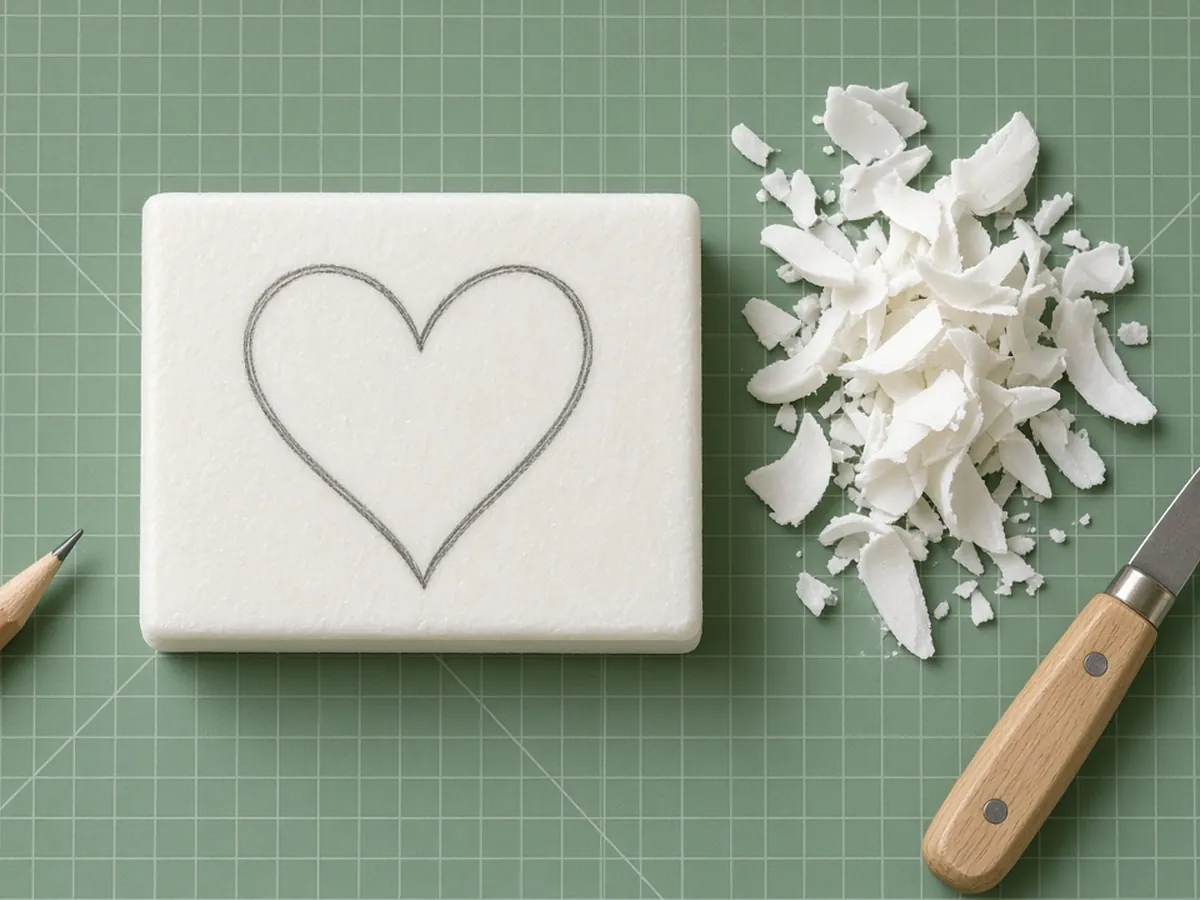
The heart is also in our free printable soap carving templates PDF.
2. Make the outside cut
Hold the knife like a pencil and take shallow bites outside your line. Work around the left side, then the right, rather than finishing one edge in a single push. Keep the blade moving away from your supporting hand. The first pass makes the heart readable, and the second brings the outline closer.
3. Shape the point
The bottom point is the part most likely to get thin, so stop when it reads clearly. Rotate the bar and compare both sides before removing more. If the point looks blunt, trim the shoulders with two light cuts rather than carving deeper into the tip.
4. Soften the edges
Make one light pass around the edge to take off knife marks. Don’t chase every flat spot. Small facets show it was made by hand. Run a dry fingertip over the lobes and point, and stop when the heart feels comfortable. Brush chips away with the towel instead of rinsing them into the sink.
Proportions that keep a soap heart strong
- Draw the heart a little smaller than your first impulse, with a clear border around the lobes.
- Make it generous in width compared with its height, with both lobes starting at the same level.
- Keep the bottom point short. The eye reads “heart” from the curves long before it checks the point.
- Check it from arm’s length before each new cut.
Heart soap carving variations and gift ideas
- Pebble heart: round the lobes and point generously for a soft shape that sits easily in your palm.
- Long heart: stretch the point slightly, but only on a thicker bar, and keep the shoulders broad.
- Quiet relief: leave the face plain and press one shallow line from the dip toward the point.
- Initials heart: once the outline is finished, plan one or two initials in pencil, then press them shallowly with a toothpick into the broad center.
- Valentine’s or wedding-favor hearts: carve several small hearts from one bar cut into pieces, then let them air-dry before wrapping them. See how to store, finish and display a soap carving.
- Heart-and-leaf pair: pair it with a leaf, which is just as forgiving, for a small set.
Rescue plan
| Problem | Fix |
|---|---|
| The point feels weak or chips | Stop cutting the tip. Shorten the heart by rounding the shoulders, or turn a tiny crack into a deliberate notch |
| The lobes are lopsided | Don’t deepen the smaller side. Shave one or two shallow passes from the fuller shoulder and recheck after each |
| Knife marks everywhere | One light perimeter pass, then stop. Deeper cuts to fix tiny marks weaken the shape |
| The bar smears | Let it rest and dry. See soap carving problems and fixes |
Safety note
Carve seated, with the towel under the soap. Use a rounded butter knife and cut away from your fingers and body. Keep chips out of eyes and mouths. Children should work with an adult close by. See soap carving safety.
FAQ
What kind of soap works best for a soap carving heart?
A firm, plain bar that holds its corners when you press it lightly. Unscented or lightly scented soap keeps the session comfortable. Avoid bars that feel wet, crumbly or waxy.
Is a heart a good first soap carving?
Yes. A heart is one of the easiest soap carvings: two curves and a short point, with no thin ears or tails. Most beginners finish it in about 15 minutes.
Can I use a craft knife instead of a butter knife?
A butter knife is the better starting tool because its rounded edge removes small amounts without much force. This project doesn’t need a sharp blade.
Can I add initials or a message to a soap heart?
Yes, after the silhouette is finished. Plan a short mark in pencil and press it shallowly with a toothpick into the broad center. Skip it if the point or lobes are already thin.
When is the heart finished?
When the silhouette is clear and it feels comfortable in your hand. It doesn’t need a smooth, glossy surface.
What should I do with the soap chips?
Keep a few curls, then put the rest in the bin. Don’t rinse a pile down the sink, because chips can collect in the drain. Here are ideas for soap carving scraps.
Another small shape?
- The forgiving leaf (20 min)
- A pocket fish (15 min)
- A rose, in three layers (30 min)
- Soap carving ideas: 12 easy designs