01 Start with a clean read
First, sort your soap scraps
The quickest answer to what to do with soap scraps: sort them, then give each size a job. Broad, clean offcuts become practice carving blocks. Small chunks and slivers go into a mesh bag or get pressed into a new bar. Shavings and curls become laundry flakes, drawer sachets or soap dough for kids. Throw away anything damp, dirty, moldy or of unknown origin.
Below are ten uses, a step-by-step method for turning scraps into a new bar, and the safety rules for melting soap.
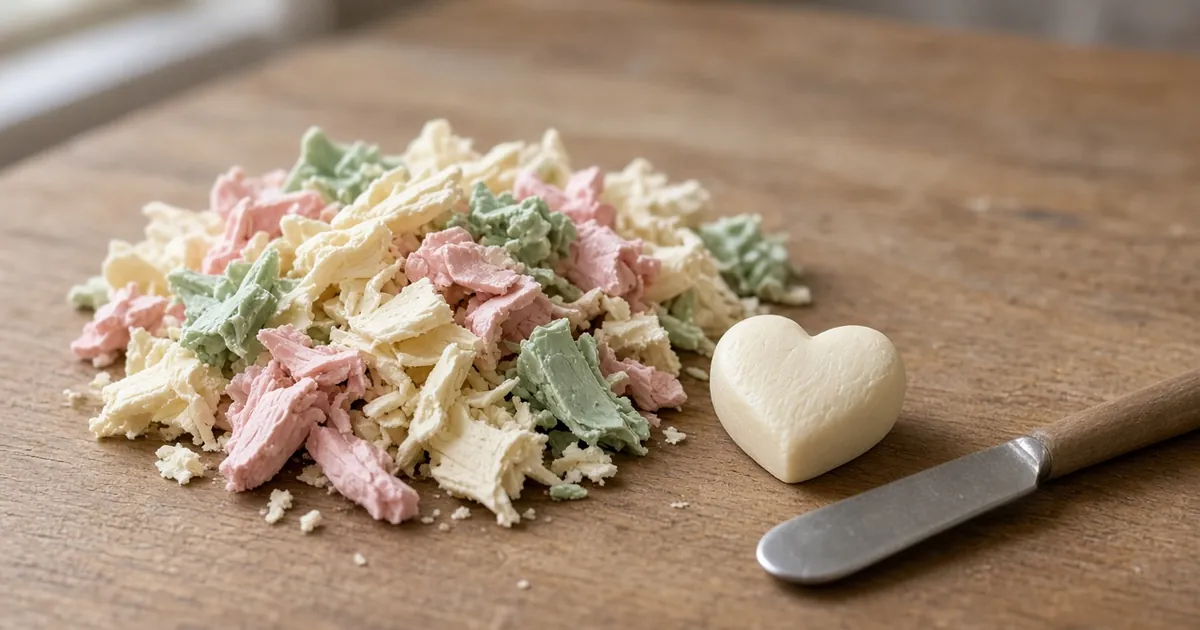
Every scrap size has a job
Broad offcuts for practice, slivers for a mesh bag or a new bar, shavings for flakes and sachets. Anything damp or dirty goes in the trash.
Before choosing a use, spend two minutes sorting the pile:
- Broad, thick offcuts. Keep for practice carving.
- Small chunks and slivers. Good for mesh bags, travel soap or rebatching.
- Curls and shavings. Laundry flakes, sachets, soap dough.
- Fine dust and questionable pieces. Discard. Anything wet, slimy, moldy, rancid-smelling or mixed with grit, paper or metal goes in the trash, not down the drain.
Keep scraps from different soaps apart when you know the source. Formulas, colors and fragrances behave differently when re-formed, and a scrap that’s “practice only” should stay labeled that way.
02 Give every size a job
10 things to do with soap scraps
1. Use offcuts as practice carving blocks
Leftover soap from a carving is a free test surface. Try a new cut, compare two tools or check whether a bar curls cleanly or crumbles before you commit a whole bar. A broad offcut is just right for a small project like the pocket heart or the leaf. Not sure which tool to test? See our soap carving tools guide.
2. Carve mini pieces
Thick chunks can carry tiny forms: a heart, a fish, a pebble-smooth animal head. Browse the animal soap carving ideas and scale a simple silhouette down to fit the scrap.
3. Press scraps into a new bar (rebatch)
Grate clean, compatible scraps, warm them gently with a little water and pack them into a mold. Full steps are below.
4. Make soap-on-a-rope or a mesh soap saver
Drop slivers into a small mesh or sisal soap-saver bag and use it in the shower like a bar. The bag lathers the bits that would otherwise slip down the drain. For a classic soap-on-a-rope, press a loop of cord into a rebatched bar while it’s still soft in the mold.
5. Grate scraps into laundry flakes
Plain, unscented scraps can be finely grated and used as flakes for hand-washing delicates or as a pre-treat rubbed on a collar or cuff. Rinse well. Skip strongly colored or oily specialty soaps on light fabrics, and don’t put soap flakes in a high-efficiency washer unless its manual allows it.
6. Fill drawer and closet sachets
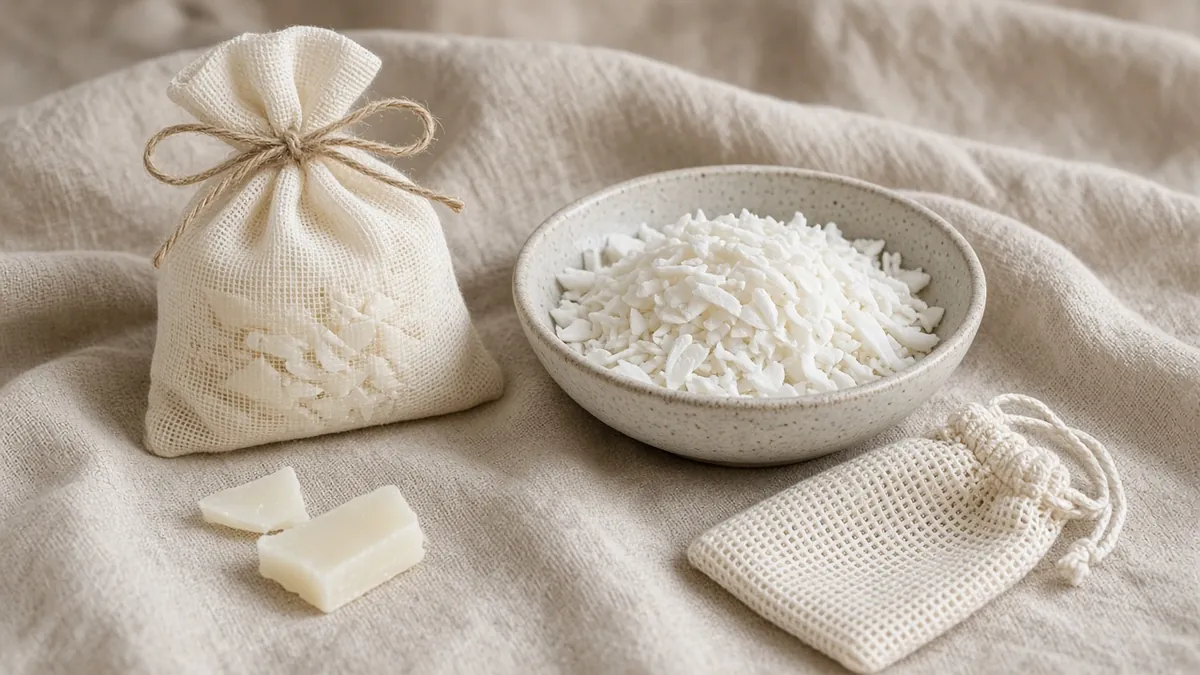
Scented curls and shavings make an easy drawer freshener. Tie them into a small cotton or muslin pouch and tuck it into a drawer, linen closet or gym bag. Refresh by squeezing the pouch or replacing the shavings when the scent fades.
7. Make soap dough for kids
Finely grated soap mixed with a small amount of water can be kneaded into a soft, moldable dough. Kids can press it into shapes or cookie cutters and let it dry into little bath soaps. Use only cool, clean scraps, supervise, and keep it away from mouths and eyes. Our soap carving for kids guide covers classroom-safe setups.
8. Keep slivers as travel or guest soap
Small, dry slivers fit in a tin for camping, the gym or a guest bathroom. Let them dry fully before closing a container, or they’ll go soft.
9. Stick a sliver onto a new bar
The old trick for bath soap: wet the last thin sliver and the new bar, press them together and let them dry. It works for everyday use, though the seam isn’t strong enough for carving.
10. Use slivers as a sewing marker or zipper fix
A thin, dry soap edge marks fabric for sewing and brushes away later. Rubbing a little dry soap on a stiff zipper or a sticking wooden drawer runner is another long-standing household trick.
03 Re-form clean scraps
How to turn soap scraps into a new bar
Rebatching re-forms finished soap. You’re not making soap from oils and lye, and you shouldn’t add lye to scraps. The method below follows the usual low-heat approach described by soap makers.
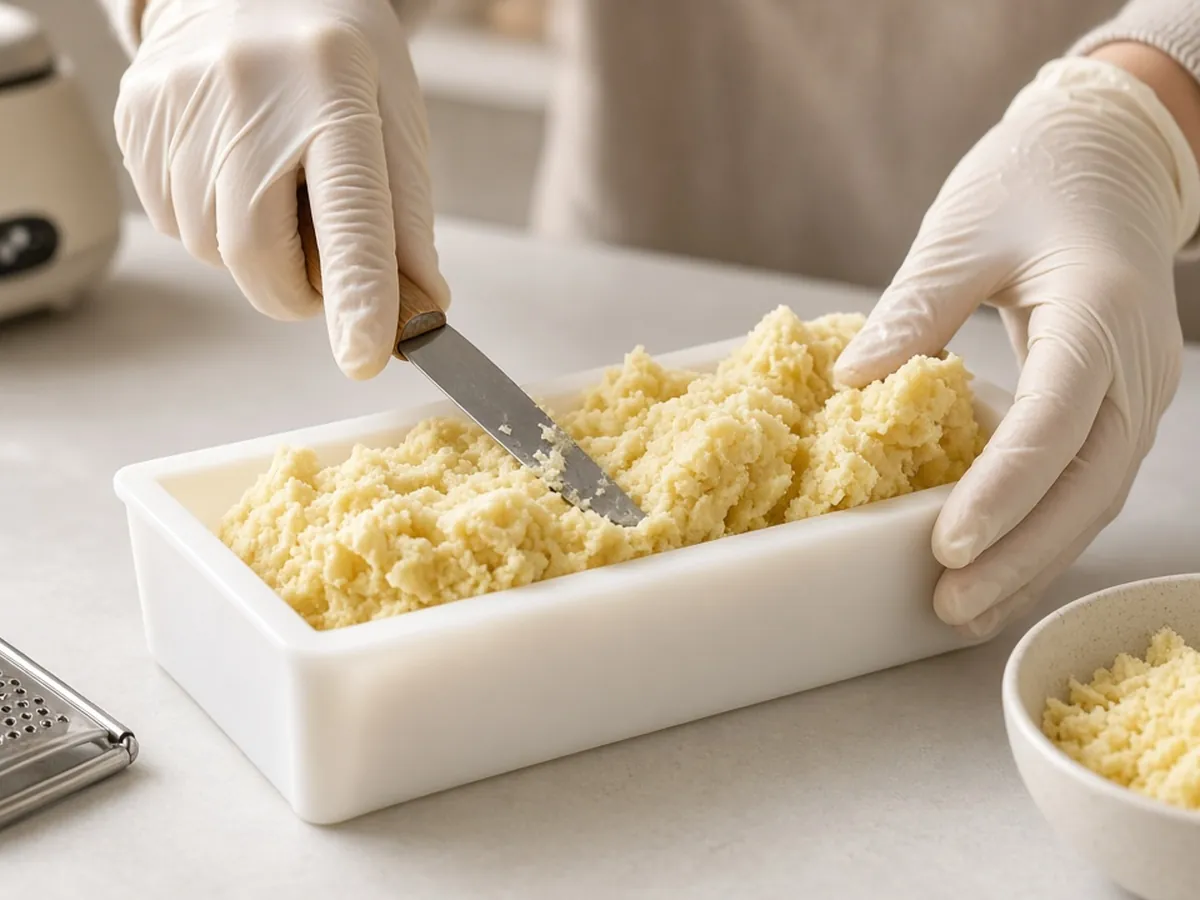
You’ll need: clean, dry scraps from known soaps, a grater, distilled water, a slow cooker or a double boiler (a heat-safe bowl over a pan of simmering water), a spatula and a mold. Treat these tools as soap equipment from now on, not kitchen equipment.
- Grate the scraps finely. Smaller shreds melt faster and more evenly.
- Add a little water. Start with only a few tablespoons of distilled water per pound of scraps. Older, drier soap needs a bit more. Too much water gives soft, sticky bars that take weeks to firm up.
- Heat low and covered. Use a slow cooker on low or a double boiler. Fold the mass every 10 to 15 minutes. It won’t turn into a smooth liquid. Expect something like lumpy mashed potatoes.
- Pack the mold. Spoon the softened soap into the mold in layers, pressing down and tapping the mold on the counter to knock out air pockets. Press in a loop of cord now if you want soap-on-a-rope.
- Let it set and dry. Leave it to firm up, unmold, and let the bars dry on a rack. Bars rebatched from fully cured soap usually firm up in about two to three weeks.
Safety rules for melting soap scraps
- Low heat only. If the bottom browns or scorches, the heat is too high. Turn it down and scrape out the scorched layer.
- Avoid the microwave for a first try. It heats unevenly, with hot spots that can bubble over or dry the edges. If you do use it, go in short bursts and watch it.
- Adults handle heat. Hot soap can burn. Children can grate and sort cool scraps under supervision but shouldn’t handle hot soap or containers.
- Never leave it unattended, and let the soap cool fully before touching it.
- Use only known, clean scraps. Mixed unknown soaps, dirty or damp pieces don’t make a trustworthy skin-contact bar.
04 Know the limits
What not to do with soap scraps
- Don’t seal damp scraps in a plastic bag. Trapped moisture makes them soft and unpleasant.
- Don’t wash soap dust down the drain in bulk. Wrap it in paper and bin it.
- Don’t combine scraps with wet “glue” and expect a carving-strength block. The seam is weak and will split.
- Don’t use a scrap of unknown formula for a project meant for skin if you’re unsure what it is.
05 Keep the pieces with potential
How to store leftover soap scraps
Let pieces dry in a single layer until they no longer feel cool or tacky, then keep them in a paper envelope or shallow cardboard box, somewhere cool and dry away from food, pets and small children. Label the source if you know it. For finished practice pieces, see how to store and finish soap carvings.
Give one saved block a simple brief.
The leaf is broad enough for a calm outline, one vein, and a clear stopping point.
06 Common questions
FAQ
What can I do with leftover soap scraps?
Use broad pieces as practice carving blocks, put slivers in a mesh soap saver, grate shavings into laundry flakes or drawer sachets, make soap dough, or press clean scraps into a new bar.
Can you melt soap scraps in the microwave?
You can, in short bursts, but it heats unevenly and can bubble over or dry out the edges. A slow cooker on low or a double boiler is easier to control for a first batch.
How do I combine soap scraps without melting them?
For bath use, wet two slivers, press them together and let them dry. For carving, a pressed or wet-joined block has a weak seam, so carve single offcuts instead.
Why did my soap scraps crack?
Soap cracks as it dries and as it’s flexed, especially thin pieces and very dry or old bars. A rebatched bar can also crack if it’s dried too fast. For cracks during a carving, see soap carving problems and fixes.
How long do rebatched soap bars need to dry?
Bars made from fully cured scraps usually firm up in about two to three weeks on a rack. The more water you added, the longer they take.
What soap scraps should I throw away?
Anything moldy, slimy, wet, rancid-smelling, contaminated with grit or paper, or from an unknown source if you planned to use it on skin.
08 Checked sources
Sources checked: 2026-10-12
- Soap Almanac, How to Rebatch Soap: Hand-Milled Soap From Grated Bars (grating, small water amounts, low covered heat, folding every 10–15 minutes, microwave hot spots, scorching, 2–3 week drying for cured soap)