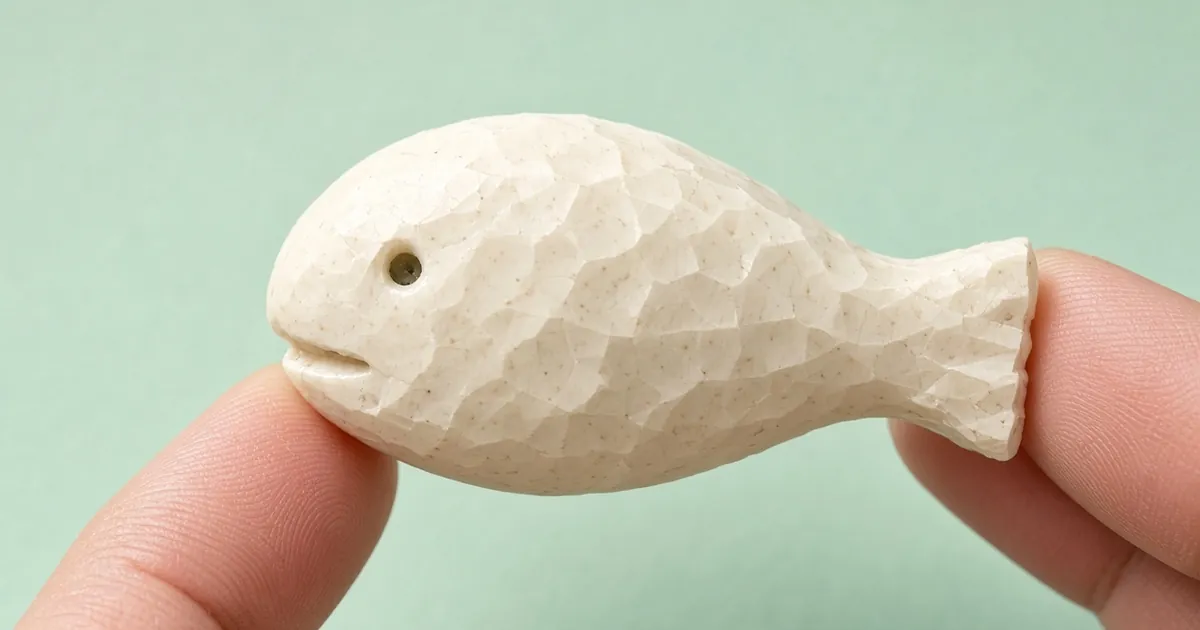
For an easy fish soap carving, sketch an almond-shaped body with a triangle tail on the broad face of a firm bar, cut around the outline with a rounded butter knife, bevel the top and bottom edges to round the body, then add a tail notch and a toothpick eye. It takes about 15 minutes and is one of the best first soap carvings: there are no ears, legs or thin points to break.
| Project | Level | Time | Soap | Tools |
|---|---|---|---|---|
| Soap carving fish | Beginner | ~15 min | One firm, unscented bar | Butter knife, pencil, toothpick, towel |
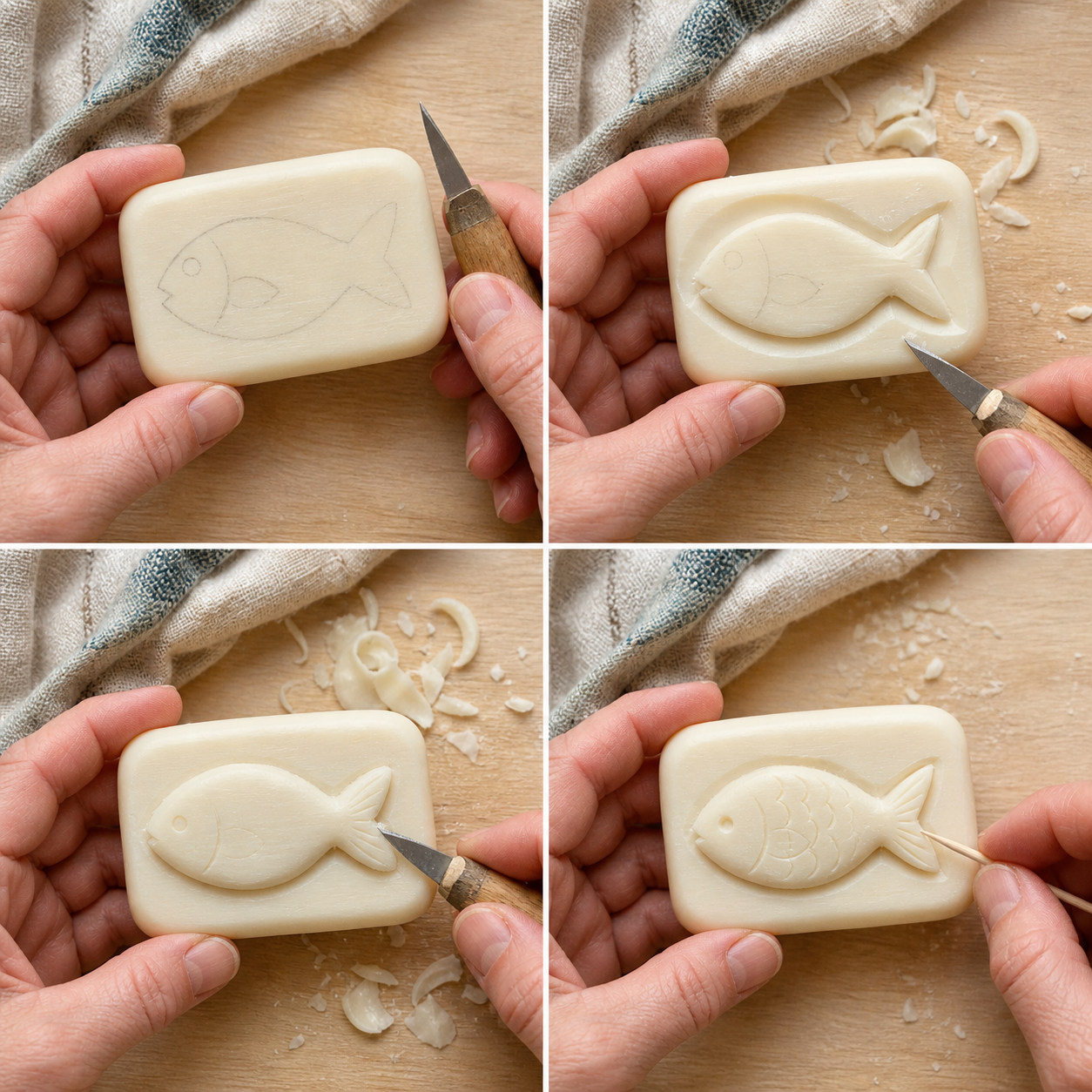
Tools and materials
- One firm bar of unscented soap, pale and wide enough to hold in both hands. See the best soap for soap carving.
- A rounded butter knife for the silhouette and broad shaping cuts
- A toothpick or wooden skewer for the eye and one or two light lines
- A soft pencil for the outline. A scrap of paper helps you test the shape first.
- A tea towel or non-slip mat to keep the bar steady and catch the curls
Keep a dry corner of the towel free. A wet bar gets slippery.
Want to trace instead of draw? The fish is one of the five outlines in our free printable soap carving templates (US Letter + A4 PDF).
How to carve a fish from soap: 4 passes
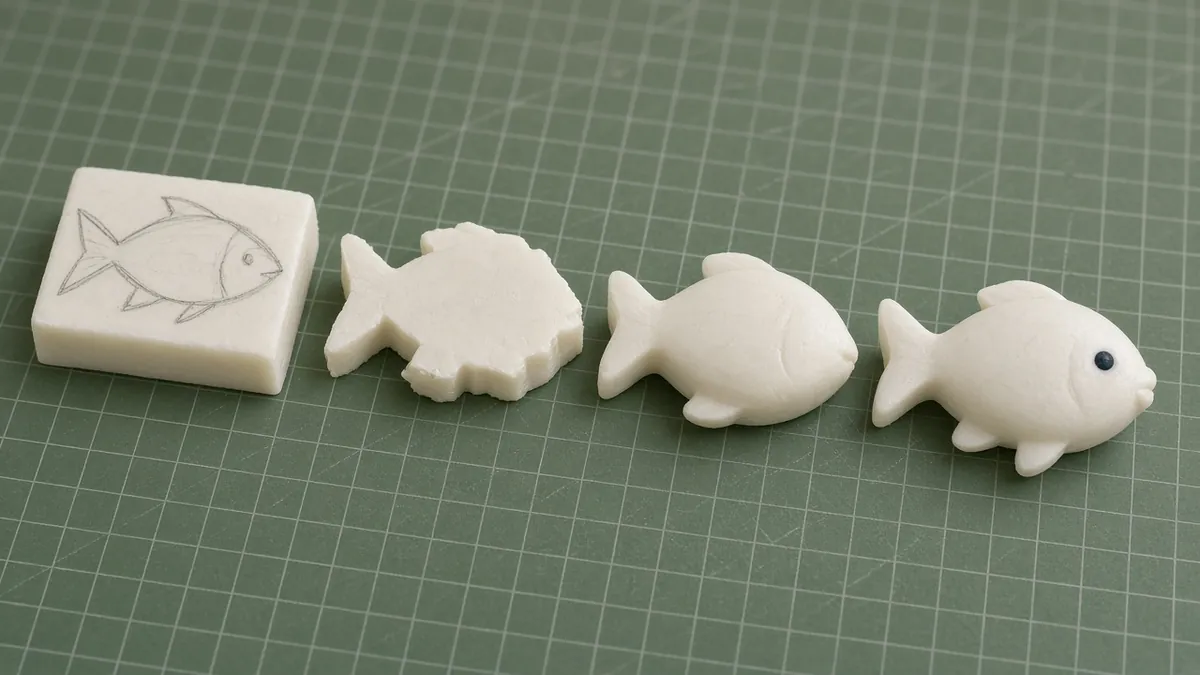
1. Draw the swimmer
On the broad face of the bar, sketch an almond-shaped body using about two-thirds of its length. Add a simple triangle for the tail and leave a generous border all around. Mark where the eye goes near the front, but don’t carve it yet.
2. Cut the outline
Lay the bar flat and take shallow cuts around the pencil line with the rounded knife. Remove the four outside corners first, then tidy the curve from nose to belly. Turn the soap as you work so your wrist stays comfortable. Keep the full thickness for now.
3. Round the body
Stand the fish on its edge and bevel the long top and bottom corners with one light pass each. That gives you a back and a belly without thinning the center. Soften the nose more than the tail. The head can be round, but the tail base needs strength.
4. Add the tail and eye
Refine the tail notch with the knife, stopping well before the body narrows. Press in a tiny eye with the toothpick and, if the bar feels sturdy, draw one shallow gill curve. Brush away crumbs, turn the fish in your hand, and stop when the silhouette reads clearly from both sides.
Why the fish reads (and how to keep it strong)
A fish becomes recognizable through three relationships: a fuller body, a smaller head and a tail that opens away from it. That’s why the side profile comes before any eye or gill mark.
- Let the body use about two-thirds of the bar’s length. Save the last third for the tail and its join.
- Keep the back and belly gently unequal rather than a perfect almond.
- Leave extra soap under the belly so the fish doesn’t become a thin wafer when you bevel.
- Keep the body at least as thick as a pencil until the very end.
Easy fish soap carving variations
- Round-nosed fish: enlarge the head and keep the tail short for a friendly, sturdy profile.
- Long-tailed fish: extend the tail only on a wide bar, and keep its root thick.
- Quiet koi: skip the gill and add one shallow curved stripe on the broadest side.
- Scaled fish: after the shape is finished, press rows of small overlapping “U” marks with the toothpick or a drinking straw cut at an angle. Keep them shallow.
- Fish relief plaque: don’t cut the outline free. Carve the background down a few millimeters around the fish so it stands out from a flat bar. See soap carving techniques for relief basics.
Rescue plan
| Problem | Fix |
|---|---|
| The tail split | Stop cutting the notch. Round the split into a shorter, sturdier tail |
| The body looks flat | Bevel only the top and bottom edges. Don’t hollow the center |
| One side is uneven | Use the fuller side as your reference and take one matching shallow pass from the other |
| A crack crosses the body | Smooth the area and turn the crack into a gill line |
More rescue ideas: soap carving problems and fixes.
Tool safety
Use a rounded butter knife and push it away from your fingers with light pressure. Hold the soap against the work surface, not in the air. Keep the toothpick pointed down when it’s not in use, and wipe the bar dry if it gets slippery. A sharper knife isn’t needed for this project. More in soap carving safety.
FAQ
Is a fish a good first soap carving?
Yes. The fish is one of the easiest soap carvings because its outline is a simple almond and triangle, with no thin ears or legs. Most beginners finish it in about 15 minutes.
Can I use scented or soft soap?
You can, but it may crumble or drag. A plain, firm bar gives the cleanest result. If your only bar is soft, chill it for 10 minutes and make the fish smaller with fewer details.
Do I need to carve both sides?
No. Match the outline on both sides, then make a few shallow bevels. The pocket fish is meant to read as a simple object.
How do I add scales to a soap fish?
After the shape is finished, press small overlapping U-shaped marks in rows with a toothpick or an angled drinking straw. Keep them shallow so the body stays strong.
What should I do if the soap cracks?
Stop and inspect the crack. Near the tail, shorten and thicken the tail. Across the body, smooth it and turn it into a gill line.
How do I keep the finished fish?
Brush off the crumbs and let it air-dry on the towel overnight. Store it somewhere dry, away from the shower or sink. See how to store and display a soap carving.