Editorial check: 2026-09-14 · Written for general education by Soap Carving Lab. Tools can cut; adults should actively supervise children. This is not professional safety advice.
15 Animal / beginner project
Carve a Dolphin from soap.
How do you make a dolphin soap carving? Start with a firm, dry bar, draw a side profile with one broad tail, remove the outside in shallow passes, and leave the personality to a few lines. This beginner project keeps the body, dorsal fin, snout, and tail connected so the silhouette stays readable while you learn to turn a bar into a small form.
Begin the six quiet stages ↓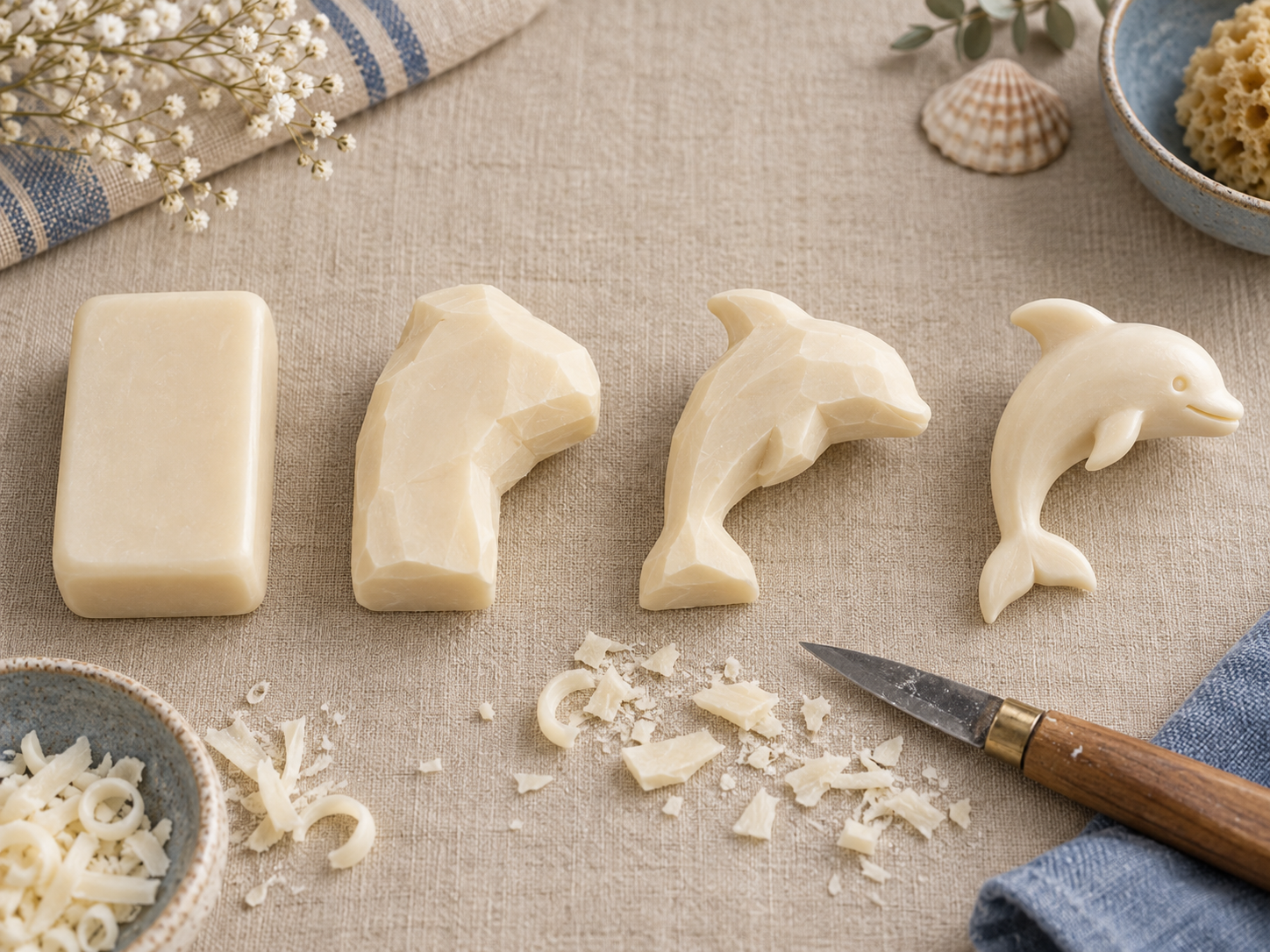
01 Set the bench
Give the dolphin a bar with room.
A dolphin needs a long, connected profile more than tiny detail. Put the broad face up, choose a bar that is dry enough to make a clean curl, and keep a towel under the work. See the best soap for carving guide for the material test, then read the safety guide before using any sharper tool.
- 01One firm, plain bar
Broad enough for a side profile.
- 02A rounded butter knife
For shallow outline cuts.
- 03A soft pencil
For body, fin, snout, and tail.
- 04A toothpick or wood skewer
For a small eye and mouth line.
- 05A dry tea towel
For grip and dry shavings.
02 Six quiet moves
Let the dolphin surface.
Read the sequence from block to finish. Turn the bar instead of twisting your wrist, keep each pass shallow, and stop to look at the end profile. The soap carving techniques guide explains the same pressure rule in more detail.
- 01
Bar / orient
Make a steady starting line.
Dry the bar and place it flat on the towel. Use the longest direction for the dolphin’s body, but leave margin at both ends. Test one underside curl; if the soap powders or asks for force, switch bars before drawing the animal.
- 02
Pencil map / side profile
Draw one generous arc.
Mark a rounded forehead, a short beak-like snout, a gently curved back, one dorsal fin, a belly line, and a broad tail fork. Keep the fin and tail attached to the body with more material than the reference seems to need. Add a light centerline only if it helps you check balance.
- 03
Waste / block
Clear the corners around the animal.
Shave the four outside corners first, then work around the pencil map in short curls. Do not cut directly to the final outline. Rotate the bar after every few passes and keep the body thick from the end view; a dolphin should not become a fragile wafer.
- 04
Profile / refine
Let the nose and back carry the reading.
Refine the forehead and snout with light passes, then soften the belly into the tail stock. Leave the dorsal fin low and broad rather than making a needle. If the curve looks stiff, remove a little from the outside of the back—not from the tail connection.
- 05
Surface / suggest
Add two or three small marks.
Use the toothpick for one shallow eye point and a short mouth line. A light pectoral-fin line can explain the underside, but do not carve the fin free. The silhouette should still read if you cover every small mark with your hand.
- 06
Base / finish
Round, inspect, and let it rest.
Bevel sharp outer edges and level the underside so the dolphin can rest without rocking. Brush the crumbs away, inspect front, side, and tail views, then let the carving air-dry on the towel. Stop while the form is strong; more detail is not automatically more dolphin.
Form note / side view
Make the curve do the talking.
A readable soap carving dolphin needs only a few relationships: a forehead that leads into a short snout, a back that rises before the fin, a belly that returns toward the tail, and a fork that stays wide. Compare those big arcs before you worry about the eye.
If you want a jumping pose, tilt the body slightly and leave a low support under the belly while carving. A side-on resting dolphin is easier for a first attempt because the body can remain one broad mass. Browse the animal soap carving ideas guide when you want a second silhouette.
03 Rescue plan
Keep the animal whole.
Thin points are the first things to go. Broaden the nearby shape instead of forcing a delicate repair, and use the problems-and-fixes guide if the bar starts crumbling.
- The soap crumbles.
- Pause, dry your hands, and try a shallower curl. If it continues to powder, choose a firmer bar and redraw the profile broadly.
- The tail cracks.
- Stop thinning the fork. Round both sides into a wider tail and keep the connection to the body thick.
- The dolphin looks like a fish.
- Check the forehead, snout, dorsal fin, and curved back before adding details. One clean back arc usually does more than extra lines.
- The carving rocks.
- Mark the high underside corner and take one level pass. Do not narrow the body to chase a perfectly thin base.
05 Five useful answers
Questions from the towel.
What soap is best for a dolphin soap carving?
Use a firm, plain, dry bar with a broad face. A clean curl under light pressure is a useful material test; avoid a bar that crumbles, smears, or needs force.
How do I keep the dolphin tail from breaking?
Leave the tail as a broad connected fork, make shallow passes, and check the side profile before thinning the split. A rounded tail is stronger than two narrow points.
Can a beginner carve a dolphin from soap?
Yes. A side-profile dolphin can stay as one connected mass: body, dorsal fin, snout and tail. Draw the silhouette first and postpone small marks until the outline reads from several angles.
Do I need a special carving knife?
No specialist tool is required for the broad cuts in this project. A rounded butter knife, soft pencil, toothpick and dry towel can support a supervised beginner session. Stop if the bar slips or a cut needs force.
Can children do this dolphin soap carving?
Children need active adult supervision through setup, carving and cleanup. Use a stable table and rounded tools, and keep any sharper blade under direct adult control.
06 The project shelf
Keep making small forms.
Choose the next project by the line you want to practice, not by how many details it promises.
See all projects ↗If you are learning how to carve dolphin from soap, keep the long curve and tail connection stronger than the reference suggests. That is the difference between a readable dolphin soap sculpture and a fragile collection of small cuts.