A field guide for small, good things

Seasonal project / 20 minutes

05 Seasonal project

A little winter geometry for a quiet table.

Beginner / firm bar / low mess

A Simple Snowflake

In 20 calm minutes, turn one firm soap bar into a crisp, six-armed relief. This is a drawing with just enough depth to catch a shadow: clear directions, shallow cuts, and no need to make every arm identical.

Time
20 min
Level
Beginner
Material
Firm bar
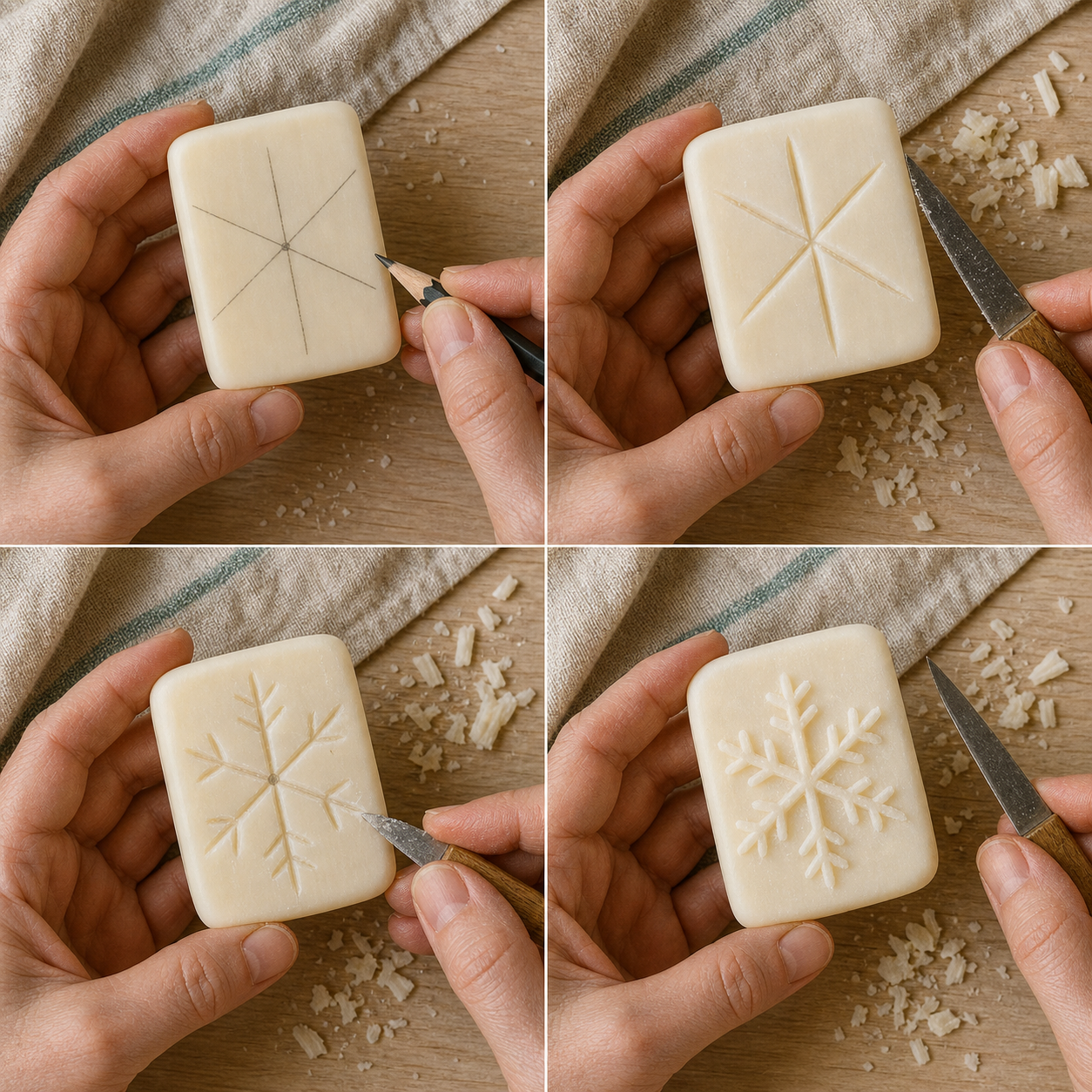
Bench map / 05 Four photographed stages of carving a soap snowflake: mark the center, draw six spokes, add paired branch cuts, and finish with a clean raised relief. six directions / one small bar
A simple map for a shape that reads from across the table.

02 The four-cut process

Let the shape
radiate.

Use the image above as your quick map. Make every mark light enough to change, then deepen only the lines that need a little more shadow.

  1. 01

    Mark the center.

    Choose the middle of the broad face, not the middle of the whole bar if its edges are uneven. Put down a small pencil dot and leave at least a finger-width of soap around it. That border gives the outer arms something sturdy to lean on.

  2. 02

    Draw six spokes.

    From the dot, draw one vertical line and two diagonal lines crossing through the same center. You are making three long lines, which become six directions. Keep them short of the edge and use a toothpick if the pencil skips on the soap.

  3. 03

    Add the branch cuts.

    On each spoke, mark one short branch on either side, angled away from the center. Place the branches at matching distances, but do not measure them. Score each mark first, then make a shallow V beside it with the knife so the line begins to cast a shadow.

  4. 04

    Clean the relief.

    Turn the bar as you work and take away only the crumbs beside your lines. Keep the snowflake itself raised. Brush the face with the towel, soften any sharp outside corner, and stop when the pattern reads clearly without needing a deeper cut.

Bench reading Let spacing lead

Make the center steady.

The snowflake works as a relief because the pattern is carried by rhythm, not tiny realism. Three crossing lines give you six directions, and the raised soap between them keeps the design joined. The eye notices the center first, then the length of the arms, then the repeated branches. This order lets a simple drawing feel intentional even when the six ends are not identical.

Use the broad face of the bar and leave a generous margin on every side. The center can sit a little above the geometric middle if one edge of the soap is uneven, but keep all six arms within the same visual field. Make the spokes longer than their branches and keep the branches well away from the center. If the bar is narrow, shorten the arms before you make the relief deeper; a compact snowflake will read more clearly than one with crowded points.

Material makes a difference in graphic work. Firm, pale soap shows the pencil map and the shadows beside each line. Work dry, support the bar on the towel, and score each guide before asking the knife to widen it. If the toothpick starts dragging or the surface becomes tacky, pause and let the bar settle. Clean lines come from light, repeatable pressure rather than force.

03 If the bar gets stubborn

A little uneven
is still winter.

01 / symmetry

One arm is longer.

Do not cut the opposite arm down just to match it. First compare the six directions from the center. If one is too long, widen the shorter arm’s branch or trim the long tip with one shallow pass. The center matters more than perfect endpoints; a snowflake can look balanced while still looking handmade.

02 / crumbly lines

The soap is breaking at the mark.

Pause and check the bar: it should be dry, firm, and supported by the towel. Switch to shorter scores and cut in the direction of the surrounding soap, rather than levering the knife through the line. If a branch keeps crumbling, erase it into a slightly wider notch and leave that arm simpler. A clean, broad line will read better than a delicate line full of crumbs.

05 Before the first cut

A few useful
answers.

Why use six spokes?

Six directions give the eye the familiar snowflake rhythm without asking you to draft a complicated pattern. Three crossing lines are easy to place, and the raised center keeps the design joined.

Should I draw the entire snowflake first?

Yes. A complete light map lets you check the spacing before the soap is committed. If the pencil disappears, redraw one arm at a time rather than pressing harder and denting the face.

What if my bar cannot hold tiny branches?

Make the branches shorter and wider, or keep one branch on each side of the spoke instead of adding more detail. A firm, plain bar will hold crisp relief better than a soft or translucent one.

Can I make this with a craft knife?

You can, but a rounded butter knife is the better first choice. The goal is shallow control. A sharp blade adds risk and is unnecessary for a snowflake that should stay broad and graphic.

Can I make a star-style snowflake instead?

Yes. Keep the six-spoke layout, shorten the side branches, and let the main points stay broad. A star variation is a good choice when the bar is soft or narrow because it needs fewer fragile cuts and still preserves the pattern’s radial balance.

06 Keep making

Another small
shape?

Choose the next project by the kind of attention you want: one long curve, a soft silhouette, or a little more texture.