01 Start with the word
Carving is the action; sculpture is the conversation.
Soap sculpture is the practice of shaping a bar into a relief or small three-dimensional form by removing material. The words soap carving and soap sculpture overlap. “Carving” describes the subtractive action of the tool; “sculpture” draws attention to the object that remains and how it occupies space.
That distinction matters when you choose a project. A leaf carved into the face of a bar is a relief: the back stays broad, and the design is read mainly from one direction. A fish, cat, or turtle asks for more than a front view. You need to keep enough material for the back, side, and underside, even if the finished object is still small enough to sit in your palm.
Soap is a friendly place to learn this because it gives quick feedback. A clean curl tells you that the edge, pressure, and direction are cooperating. A smear says the bar is soft or warm. A cracked point says the form has become too thin for the material. You can respond immediately, which makes a small sculpture an honest study rather than a test of patience.
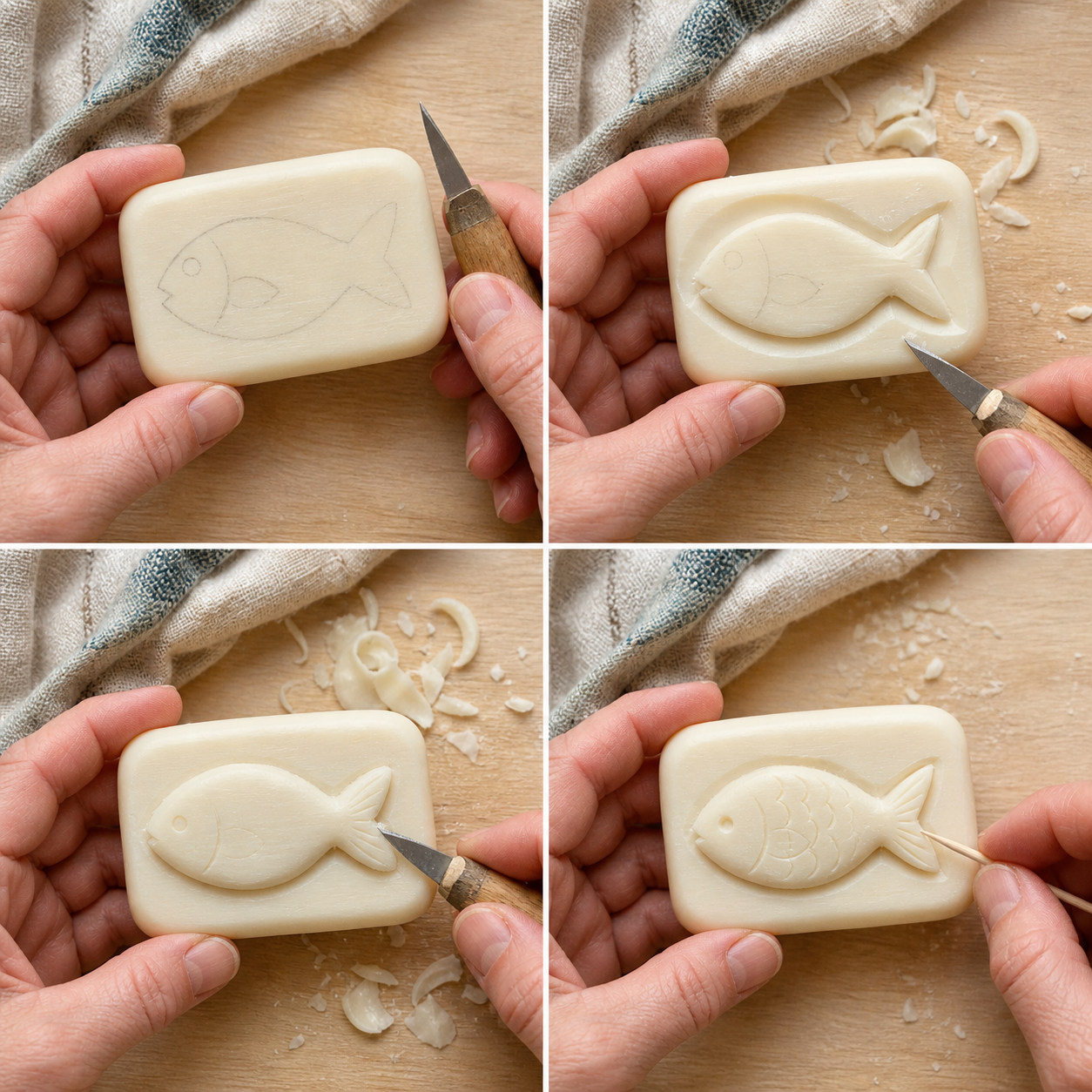
Establish the body and tail before the eye, fin, or scale marks.
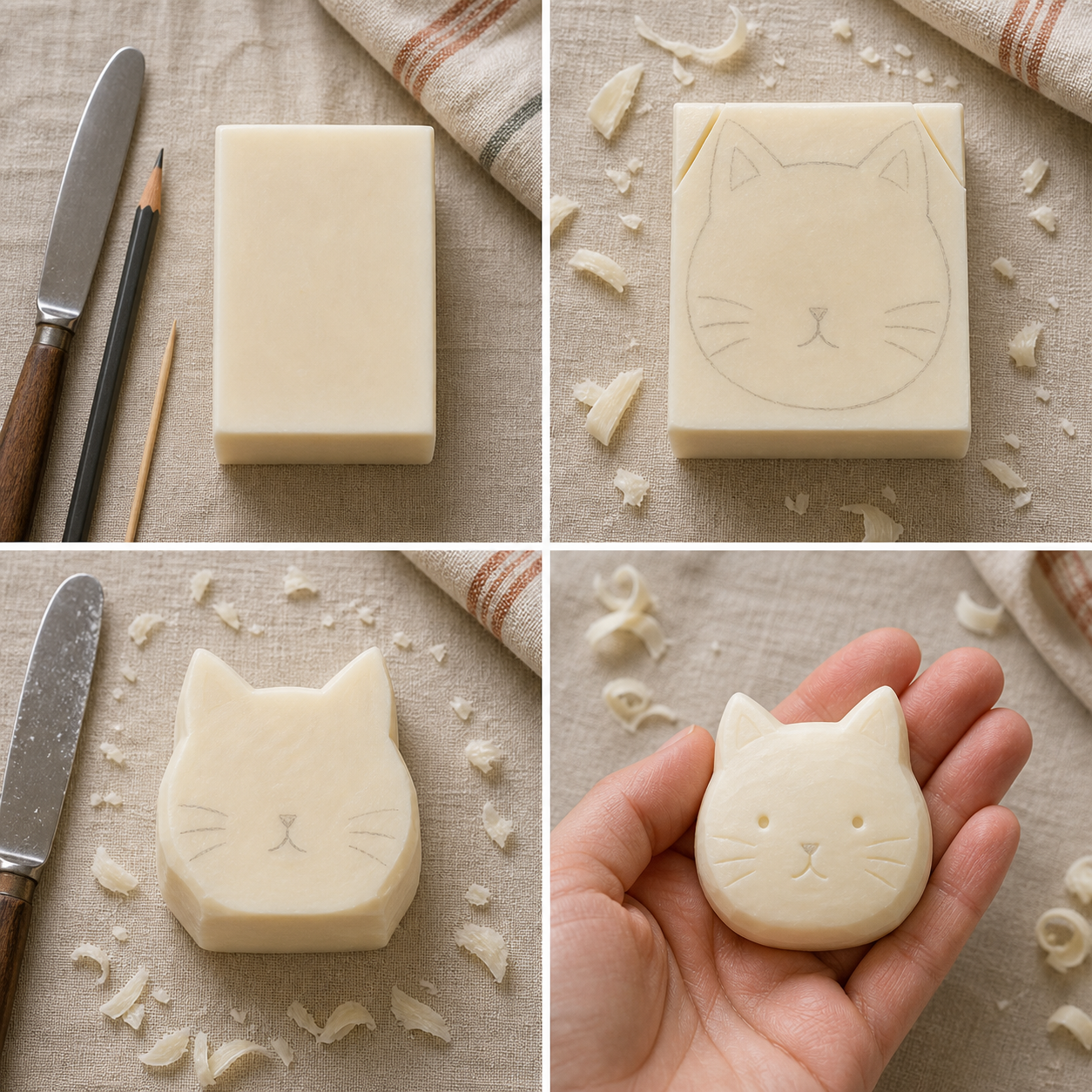
Pointed ears only work when they keep a broad connection to the head.
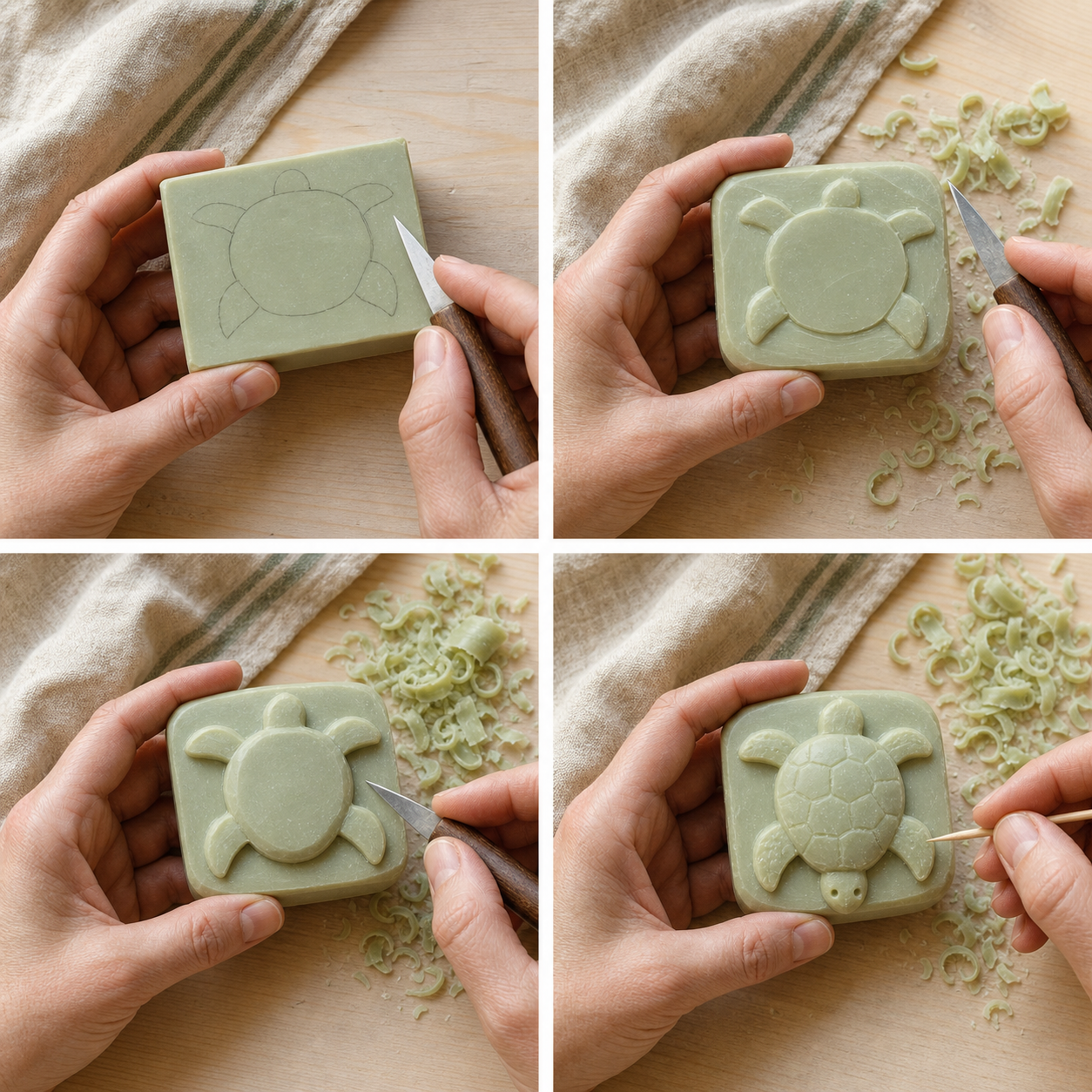
A broad shell makes room for texture without sacrificing the feet.
02 Pick a first volume
Choose the form that lets you look.
A first soap sculpture should give you a reason to turn the bar, but not so many reasons that every view becomes a repair. Choose one main volume and one secondary feature. The rest can remain suggested.
Profile
A fish or dog can be understood from one strong side view. Keep the body broad and use the opposite side to check that the mass has not become a flat cutout.
Rounded form
A turtle or small animal asks you to soften the corners and keep a base. Work around the bar slowly; the goal is a stable mass, not a perfectly smooth surface.
Relief first
If volume feels too open-ended, begin with a leaf, heart, or flower relief. It still teaches height and shadow, with the back of the bar doing much of the structural work.
The soap carving ideas guide is useful when you are choosing between these routes. Read the short descriptions, then open the project whose one new challenge feels manageable. The best first sculpture is not necessarily the most realistic animal; it is the one you can inspect from three angles without losing the main shape.
Relief
- One broad face carries the idea.
- Good for leaves, hearts, flowers, and snowflakes.
- Depth comes from lowered background and shallow ledges.
- A forgiving place to learn a pencil map.
Small sculpture
- The outline must work from more than one side.
- Good for fish, cats, dogs, and turtles.
- Bridges and bases need more material than the picture suggests.
- Turning the bar is part of every major cut.
03 A reliable block-in
Build the sculpture from large to small.
The first stages of a soap sculpture should look almost plain. That is a good sign. You are building the mass that details will later sit on, not decorating a surface that has not earned its shape yet.
Test the bar
Ask for one clean curl.
Work on a dry towel and try a spare corner with a rounded tool. A firm, opaque bar is usually easier to read and control. If the soap crumbles or smears, change the material before you commit to a small ear, fin, or foot. See how to choose the bar.
Draw the mass
Map the silhouette, not every feature.
Use a soft pencil to draw the profile or top view. Mark a centerline and the widest part of the body. Leave a generous border around the drawing so the first outside cuts can be corrected without eating into the form.
Block in
Remove the corners and waste.
Take short passes around the outside of the drawing. Do not chase smoothness yet. Your goal is to turn the rectangular bar into a rough mass with the correct direction: longer here, wider there, and still thick enough to support the next view.
Turn and compare
Check face, side, and end.
After each major change, rotate the soap. A fish that reads from the side may be too thin from the end; a cat’s ears may be strong in profile but weak across the head. Correct the biggest relationship first, not the smallest mark.
Refine the planes
Keep a little handmade surface.
Round only the corners that help the form turn. Leave a few purposeful facets if they catch the light. Add one or two details with a toothpick after the silhouette is sturdy, then stop before the bar becomes fragile.
Need the cutting order?
The techniques guide explains shallow passes, relief, profiles, and texture.
04 Four forms to open
Let the project carry the detail.
Use these project pages when you are ready to trade the general idea for a sequence of cuts. Each one gives the sculpture a clear promise and a sensible stopping point.
A pocket fish.
Start here for the cleanest introduction to volume: one body, one tail, and a few details that can stay shallow.
A quiet cat.
Learn how to keep ears and cheeks expressive without letting the points become unsupported scraps of soap.
A friendly turtle.
Practice a broad shell, a stable base, and repeated texture that follows the form instead of flattening it.
A loyal dog.
Use a muzzle and floppy ears to study how a few planes can suggest a face while the body stays strong.
05 Sculpture questions
A few things worth knowing.
What is soap sculpture?
Soap sculpture is the practice of shaping a bar of soap into a relief or small three-dimensional form by removing material. The terms soap carving and soap sculpture overlap; sculpture emphasizes the finished volume, while carving describes the subtractive action.
How do I make a soap sculpture?
Choose a firm bar, draw a simple silhouette, remove the corners and surrounding waste, then turn the bar often while you establish the main planes. Add small details only after the form is sturdy from the front, side, and end.
What is the easiest soap sculpture for beginners?
A fish, leaf, heart, or turtle is a useful first sculpture because each has a readable outline and broad connections between parts. Avoid isolated thin points until you understand how your bar responds. The ideas guide can help you choose a form by difficulty and time.
Is soap sculpture the same as soap making?
No. Soap sculpture starts with a finished bar and removes material. Soap making combines ingredients or a base to create a new bar. They are related soap-centered crafts, but the tools, timing, and decisions are different. Read the carving versus making comparison for a fuller explanation.
What tools do I need for soap sculpture?
A beginner can start with a firm bar, a soft pencil, a dry towel, and a rounded carving or butter knife. A toothpick can add shallow marks. Specialist gouges are optional and should solve a specific repeated problem rather than replace learning the material. See the starter tool guide before buying a drawer of equipment.